Lead Designer, Bonus XP 2017
Stranger Things: 1984 is a Zelda-inspired adventure game. It is a retro-style game, designed to match the same 80’s nostalgia of the show. Set between the events of Season One and Season Two, the game was originally developed as promotional material for the second season of the Netflix show. This was the first game officially produced for Netflix. In 2018 the game was nominated for a BAFTA (British Academy of Film and Television) for best mobile game, and still remains a featured game on the Netflix mobile platform.
The game was developed with a small team on an 8-month schedule. As it was a promotion for season 2, the game had a strict launch date one month prior to the release of the series. Our team had to rapidly prototype game systems and features in order to present a fun and exciting product in a short time.
MY Role
As the lead designer on this project, I was responsible for all systems, story, levels, and puzzles. I worked with artists and programming to theme and design all of the game’s dungeons, enemies, and bosses. I designed and built dungeon levels and the entire world map.
I worked with stakeholders at Netflix to create a story for the game that would fit into the Stranger Things world, but would not spoil anything from Season 2.
Characters as Tools
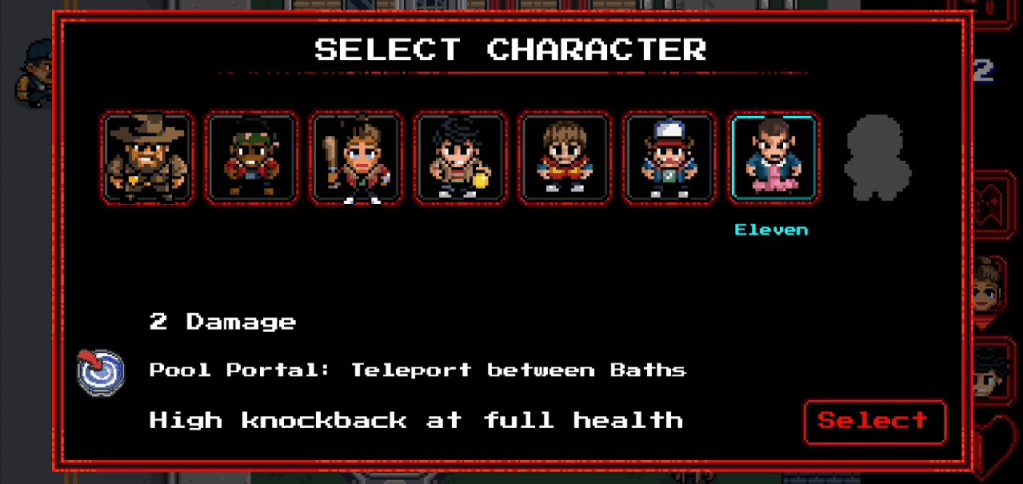
One of the things I love about the Stranger Things series is the ensemble cast and how every character works together to save the day. Our team wanted to capture this same group effort for our game. This is why we broke the traditional rule of Metroidvania style games that focus on a single hero that grows in power as they collect various tools.
Instead, we decided to make the characters themselves the tools. Each character has their own unique ability to solve puzzles and fight in combat, be it Lucas with his ability to hit far-off switches with his “wrist rocket,” or Mike’s ability to stun enemies with his high-powered flashlight. This also let us introduce Eleven as a secret character – her fate was unknown at the end of Season 1, which meant she could not be an official character in the game for spoiler reasons.
While every player may have a favorite character they use most of the time, each character has their time to shine at different points throughout the game.
Building Hawkins
One of the fun challenges I had was to turn the fictional town of Hawkins into an in-game world for the player to explore. Like many fictional towns from television, there was no official map to speak of.
I started the process by breaking up the world into “screens,” creating a grid of many different smaller maps. Each screen, and the overall map were built to an aspect ratio common to most mobile devices.
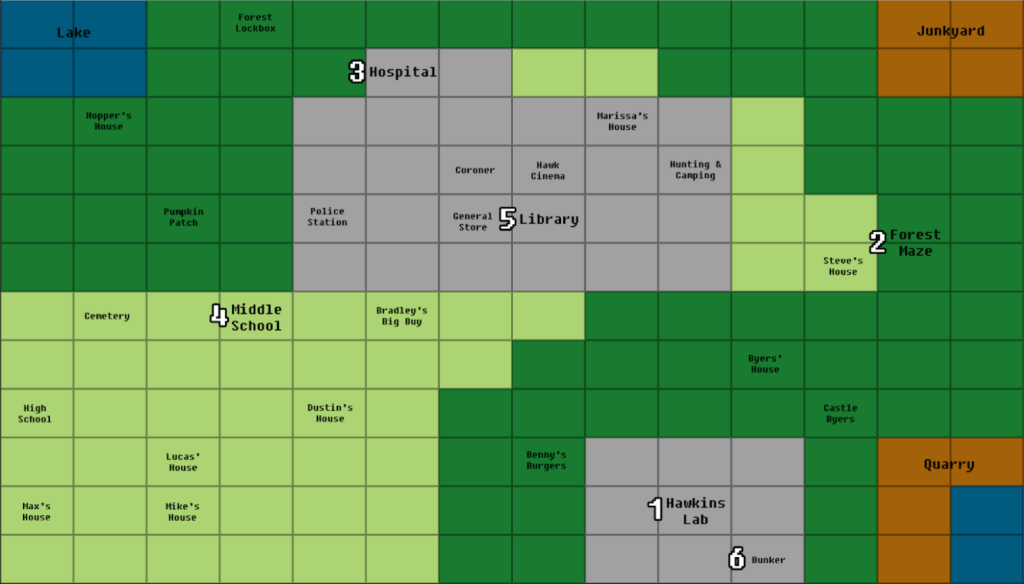
From there, the map was broken up into regions (Hawkins Lab, town square, the suburbs, forest, etc.). This provided smaller areas for me to place all of the dungeons and other landmarks, such as the homes of the main characters, or notable buildings from the town square.
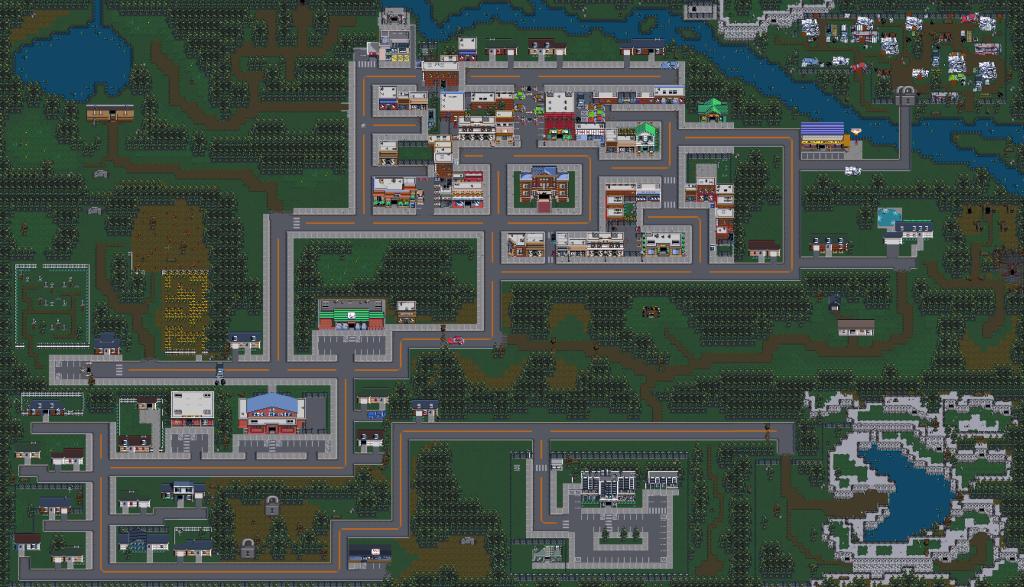
The final step was stitching together these different regions with transitional screens, placing navigation obstacles to block off areas based on player progression and adding in secret areas full of hidden rewards and Easter eggs.
 William Lemons